When the sun is out and stone or block paving is dry, driveways and patios look their best.
However, in parts of the world that face colder periods, elements such as rain, frost and shorter days with less sunlight all put increased pressure on block paving and natural stone. These can causes real issues if they do not have protection from sealing.
If you’ve noticed your paving:
Looking green or discoloured
Feeling slippery
Paving slabs starting to shift or move
These are often signs that the surface requires some immediate help.
Algae: the hidden slip hazard
Damp, shaded conditions are ideal for algae, moss and lichen. Unsealed paving is porous, so it holds moisture close to the surface for longer. This gives organic growth the foothold it needs, and one that can become dangerously slick.
Slips and trips are one of the most common causes of injury in the UK, both at home and at work. For homeowners, a green, greasy patio or path can be a real risk for children and older relatives, especially if covered by fallen wet leaves. For businesses, schools and commercial sites, it can also become a liability issue.
Sealing reduces the porosity of the surface, which means water sits on top and runs off rather than soaking in. With less trapped moisture, algae struggles to establish itself and any growth that does appear is far easier to clean away.
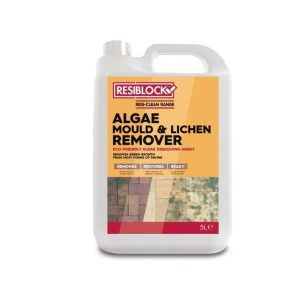
While paving sealer is a good long term solution for this, it may not be viable given the time of year (discussed below). We also provide Resiblock Algae, Mould and Lichen Remover to help with removing this more quickly it is an immediate issue.
The sand between block paving does more than fill gaps. It locks the paving together, spreading load across the surface and stopping individual blocks from moving. Over the autumn and winter, heavy rain can wash this sand out, pressure washing strips it away and freeze-thaw cycles can loosen it further.
Once the jointing sand goes, pavers can start to rock, sink or shift, particularly on uneven or sloping ground and on driveways where vehicles turn. Left alone, this leads to trip hazards, allows weeds to take root in open joints and, eventually, leads to the cost of relaying the paving.
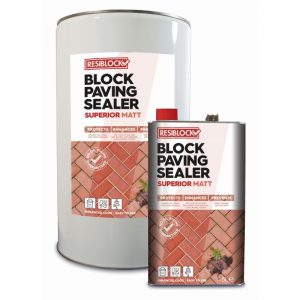
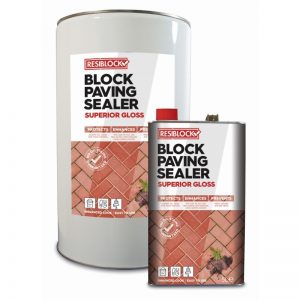
A joint stabilising sealer such as Resiblock Superior binds the sand in place, so it stays put through the wettest months. The paving stays interlocked, weeds have a much harder time getting through and the surface keeps its shape.
Re-sanding block paving in the short term
In the short term, to resolve this issue with block paving you can add new kiln dried sand but before doing this you should:
Remove weeds fully, roots included. A joint scraper or weeding knife works; a weedkiller first can help with stubborn roots. Anything left behind will regrow through the new sand.
Clear the old joint material. Scrape out loose or contaminated sand and debris to a decent depth (ideally 15 to 20mm or more), otherwise the new sand just sits on top and blows or washes away.
Let the paving dry completely. This is the step people skip. Kiln-dried sand won’t flow into damp joints and will clump on the surface.
Brush in kiln-dried sand. Sweep it diagonally across the joints until they’re full.
We also advise compacting it. On block paving, you can run a plate compactor over it (with a rubber mat to avoid marking the blocks), then top up and repeat. Without compaction the sand can leave gaps.
Note: This applies to block paving and some flexibly laid paving. Most natural stone patios (Indian sandstone, limestone, slate) are laid with mortar or grout joints, and loose sand isn’t the right fix there. Those need re-pointing with mortar or a brush-in resin jointing compound.
Most paving sealers need dry conditions and temperatures above around 5°C to cure properly, so the depths of winter are rarely the right time to apply them. That doesn’t mean winter is wasted. It’s the best time to:
Note where water pools or algae builds up in wetter periods and where sealing is most required
Check for open joints and areas where sand has washed out
Decide whether the surface needs immediate cleaning, re-sanding or repairs before sealing
Build a budget and book any professional work early, before spring demand picks up
By doing the assessment now, you can clean, re-sand and then be ready to seal as soon as the weather allows in spring, giving your paving increased protection for the coming years.
Why does paving get slippery in autumn and winter?
Paving becomes slippery in autumn and winter because damp, shaded conditions allow algae, moss and lichen to grow on the surface.
Unsealed paving is porous, so it holds moisture close to the surface for longer and gives organic growth a foothold, especially under fallen wet leaves. Slips and trips are among the most common causes of injury in the UK, and the Health and Safety Executive highlights wet and contaminated surfaces as a key risk.
Sealing reduces porosity so water runs off rather than soaking in, which makes it much harder for algae to establish. Resiblock sealers such as Resiblock Superior Natural Matt help keep surfaces cleaner and safer through the wetter months, and any growth that does appear is far easier to clean away. For existing growth, Resiblock Algae, Mould and Lichen Remover helps clear it more quickly.
Can I seal my paving in winter?
Winter is rarely the right time to seal paving, as most sealers need dry conditions and temperatures above around 5°C to cure properly.
Cold, damp weather can stop a sealer curing correctly, which affects how well it protects the surface. It’s worth checking the forecast with the Met Office and waiting for a dry spell in spring before applying any sealer.
Winter is the ideal time to assess your paving and plan ahead, so you’re ready to seal as soon as conditions allow. Resiblock’s how to apply guide explains the conditions and preparation needed for the best results.
How do I stop jointing sand washing out of block paving?
The most effective way to stop jointing sand washing out is to use a joint stabilising sealer, which binds the sand in place.
Heavy rain, pressure washing and freeze-thaw cycles all loosen jointing sand over autumn and winter, which can cause blocks to rock, sink or shift. The Interpave paving association provides further guidance on how jointing sand keeps block paving interlocked.
Resiblock Superior is a joint stabilising sealer that keeps sand in the joints through the wettest months, helping the paving stay interlocked and making it harder for weeds to grow through. It’s available in Natural Matt and Gloss finishes.
Should I re-sand the joints on my Indian sandstone patio?
No, most Indian sandstone patios are laid with mortar or grout joints, so loose sand isn’t the right fix.
Natural stone patios, including Indian sandstone, limestone and slate, usually need re-pointing with mortar or a brush-in resin jointing compound when joints fail. Re-sanding with kiln-dried sand is only suitable for block paving and some flexibly laid paving.
How should I prepare my paving for sealing in spring?
Use the winter months to assess your paving, so it can be cleaned, repaired and re-sanded before sealing in spring.
Note where water pools or algae builds up, check for open joints and decide whether the surface needs cleaning or repairs first. Booking any professional work early also helps you avoid the spring rush, and organisations such as TrustMark can help you find a vetted tradesperson.
When you’re ready, browse the Resiblock shop to find the right sealer for your surface. Resiblock’s technical data sheets provide full product details, so you can choose with confidence before the season begins.
As the temperature drops, your patio may be the last thing on your mind, but Indian sandstone needs a little care to come through winter looking its best. Strong winds, heavy rain, frost and fallen leaves can all take their toll on natural stone. Here’s how to protect Indian sandstone in winter and set it up for spring.
At a glance
Keep sandstone clear of leaves and debris, and treat stains with a mild soapy solution
Avoid pressure washing in cold weather, as the stone can take 14 days or more to dry
Sealing gives the best long-term protection, but needs dry weather between 3°C and 30°C, so seal in autumn or plan for spring
How winter affects Indian sandstone
Indian sandstone is a porous natural stone, which is part of its charm but also what makes it vulnerable in the colder months. Left unprotected, it can face:
SaturationProlonged rain soaks into the stone and slows drying
FrostWater in the stone can freeze and expand, stressing the surface
Algae and mossDamp, shaded slabs make it easy for green growth to take hold
StainsWet leaves, mud and spills can leave marks on unsealed stone
Winter care for Indian sandstone
Sweep regularly: on a mild, dry day, brush the slabs with a stiff brush to clear dirt and debris and help prevent mould forming.
Clear fallen leaves: wet leaves left in place can stain the stone and keep it damp.
Treat stains early: clean mud, drink or oil marks with a mild soapy solution before they set in.
Be careful with pressure washing: in winter, washed sandstone can need at least 14 days to dry out fully, so save deep cleaning for milder weather where you can.
Check the joints: Indian sandstone is usually laid with mortar or jointing compound, so keep an eye out for cracks or gaps that could let water in.
Can you seal Indian sandstone in winter?
Sealing is the best way to protect Indian sandstone long term, but it does need the right conditions. The stone must be bone dry, the temperature between 3°C and 30°C and no rain forecast for at least 8 hours. In the UK, those conditions are hard to find in midwinter.
The ideal approach is to seal in early autumn, before the cold sets in. If you’ve missed that window, use the winter to keep your patio clean, then plan to seal on the first settled spell in spring so it’s protected for the year ahead. If you’d like to seal outside the recommended temperature range, speak to our technical team first on 01268 273344.
The best sealer for Indian sandstone
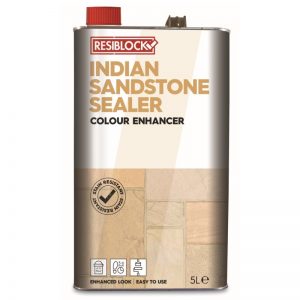
Resiblock Indian Sandstone Sealer Invisible is a deep penetrating, one coat sealer that forms an invisible barrier against dirt, fluid damage and algae. It’s UV resistant, so your stone won’t fade in summer sun either, and it’s suitable for most natural stone including sandstone, Yorkstone, limestone and granite.
Keep your Indian sandstone clean and clear of leaves through winter, and seal it when conditions allow for long-term protection.
Sweep the slabs with a stiff brush on mild days and treat stains with a mild soapy solution. Avoid pressure washing in cold weather where possible, as the stone can need at least 14 days to dry out fully.
Frost can stress unsealed Indian sandstone, as water absorbed into the porous stone freezes and expands.
Over repeated freeze and thaw cycles, this can affect the surface of the stone and its joints. Keeping the stone clean and limiting how much water it absorbs both help reduce the risk.
A deep penetrating sealer forms a barrier against water and dirt. Browse the Resiblock natural stone range to find the right protection for your patio.
Can I seal Indian sandstone in cold weather?
Indian sandstone sealer should be applied between 3°C and 30°C, on bone dry stone with no rain forecast for at least 8 hours.
Those conditions are rare in a UK winter, so early autumn or a settled spell in spring is usually the best time to seal. Check the Met Office forecast before you start.
If you’d like to seal outside the recommended range, speak to the Resiblock technical team on 01268 273344 or contact Resiblock first.
When can I seal new Indian sandstone?
Wait at least 8 weeks after installation before sealing new Indian sandstone paving.
Indian sandstone is usually laid as a rigid system with mortar or jointing compound, and both the stone and joints need time to dry out fully. This allows the sealer to penetrate properly.
As the temperature drops and the garden furniture goes into storage, it’s tempting to shut the back door and leave your patio to face the elements. But a thorough clean before winter makes a real difference. It stops algae and moss taking hold over the damp months and means your patio is ready to enjoy the moment the warmer weather returns.
At a glance
Clean your patio in autumn while the weather is still mild, and avoid washing it in freezing conditions
If you can catch a dry spell between 3°C and 30°C, sealing gives months of winter protection
Different patio surfaces need different sealers, so match the product to your paving
Why clean your patio before winter?
Autumn rain and fallen leaves create the perfect conditions for algae, moss and lichen to grow on your paving. Left over winter, that growth spreads, makes the surface slippery and is much harder to shift in spring. A pre-winter clean clears it away while conditions are still mild enough to let the paving dry out properly.
Your pre-winter patio cleaning checklist
Clear the areaMove furniture, pots and planters so you can reach the whole surface and nothing traps damp over winter.
Sweep away debrisBrush off leaves, soil and loose dirt with a stiff broom, paying attention to corners and edges.
Remove algae and mossOn a mild, dry day, pressure wash the paving to lift green growth. Avoid doing this when frost is forecast, as water that freezes on or in the paving can cause damage.
Treat stainsTackle any oil, drink or barbecue marks with a mild detergent before they set in.
Check the jointsLook for gaps or loose jointing sand where water and weeds could get in, and fix them now rather than in spring.
Let it dry fullyGive the paving plenty of time to dry out before sealing or covering anything. In cooler weather, natural stone can take two weeks or more.
Should you seal your patio before winter?
Sealing is the best way to protect your patio through the colder months. A good sealer keeps out rain and stops algae, moss and stains forming, and it protects against fading when the sun returns next year.
Timing is the key. Most Resiblock sealers need dry paving, a surface temperature between 3°C and 30°C and no rain forecast for 8 to 12 hours, depending on the product. Early autumn is usually your last reliable window. A garden awning over the patio can also protect fresh sealer from an unexpected shower. If the weather has already turned, keep the patio clean through winter and plan to seal in spring.
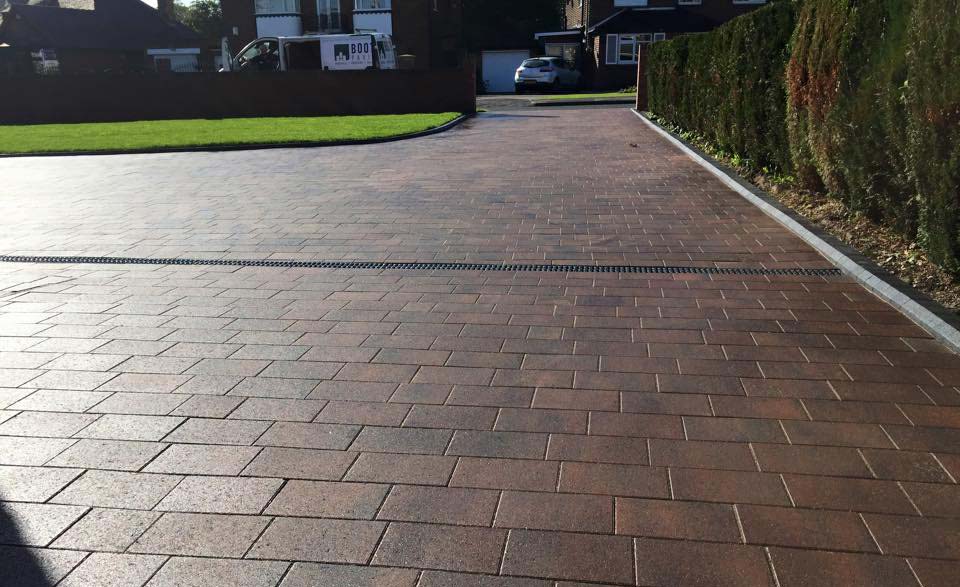
Your driveway is often the first thing visitors see, so it’s worth giving it the same attention before winter. Block paving drives can be sealed with Resiblock Superior Matt or Superior Gloss, while tarmac needs a dedicated restorer such as Resimac. Our guide to choosing a driveway sealer covers every surface.
Get your patio winter-ready
Order samples to test the finish on your paving, or find a Resiblock registered contractor to do the job for you.
Yes, cleaning your patio before winter removes debris, algae and moss that autumn rain can encourage.
A pressure wash clears built-up growth and prepares the surface for sealing, but avoid doing this in very cold weather as freezing water can damage the paving. Keeping paving clean also reduces slippery surfaces, which the HSE highlights as a common cause of falls.
You can seal your patio in autumn as long as the paving is dry, the surface temperature is between 3°C and 30°C and no rain is forecast while it dries.
Depending on the product, you’ll need a rain-free window of 8 to 12 hours. A garden awning over the patio can also protect the fresh sealer from unexpected showers.
Check the Resiblock application guidelines for the product you choose, or plan to seal in spring if the weather has already turned.
What sealer should I use on my patio?
The right patio sealer depends on your paving, as block paving, natural stone, porcelain and concrete each need a different product.
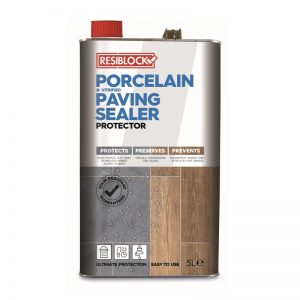
Block paving suits a sealer that binds the jointing sand, while natural stone needs a penetrating sealer and porcelain needs a fine formula made for its dense surface. Using the wrong product can give poor results.
Tarmac driveways need a dedicated product such as Resimac tarmac restorer rather than a block paving sealer.
Your driveway is often the first thing visitors see, so it’s worth protecting alongside your patio before the colder months. Apply it in dry weather for the best finish.
Are you looking to grow your business with a proven, specification-led product range? Resiblock International Ltd is looking for distributors in countries and regions around the world to represent the brand and supply its paving protection products to contractors, specifiers and homeowners.
With over 30 years in the industry and more than 100 million square metres of paving treated, Resiblock gives its distributors access to high-profile projects, market-leading products and hands-on technical and marketing support.
Why partner with Resiblock?
Resiblock is known worldwide for its joint stabilisation and water management solutions for block pavements. Products such as Resiblock 22 and Resiblock 22WB have been used on demanding sites from roads and car parks to aircraft aprons, distribution centres and port pavements, with installations ranging from RAF Kinloss in Scotland to Christchurch Airport in New Zealand.
When you partner with Resiblock, you align your business with a brand recognised for quality, reliability and innovation in paving protection.
Benefits of becoming a Resiblock distributor
Access to high-profile projects: work on prestigious commercial schemes that strengthen your portfolio and reputation. See examples in our commercial case studies.
Technical knowledge and training: draw on decades of research and site experience, including our library of academic papers, along with technical training from our team.
A market-leading product range: offer clients proven solutions from our commercial sealers and domestic sealers ranges that reduce maintenance costs and extend pavement life.
Marketing support: benefit from dedicated marketing assistance to help you promote Resiblock in your territory.
Established brand recognition: build on a reputation earned over 30 years worldwide, giving you a head start in your region.
Joint aggregate stabiliser that keeps paving permeable
SuDS and permeable paving schemes
Ready to join us?
If you’d like to become part of a successful international network, we’d love to hear from you. Get in touch with Resiblock with details of your business and the region you cover, and our team will talk you through the opportunity.
Resiblock Distributor FAQs
How do I become a Resiblock distributor?
To become a Resiblock distributor, get in touch with Resiblock International Ltd to discuss representing the brand in your country or region.
Resiblock works with distributors around the world, giving partners access to high-profile projects, technical training and marketing support. You can see the type of work distributors get involved in by browsing the commercial case studies.
Ready to start the conversation? Contact Resiblock to find out whether your territory is available and what partnering with a brand with over 30 years of experience could mean for your business.
What products do Resiblock distributors sell?
Distributors supply Resiblock’s range of paving sealers and joint stabilisers, including Resiblock 22 and Resiblock 22WB for heavily trafficked block paving.
Resiblock 22 and 22WB stabilise jointing sand on block pavements in high-traffic settings, from busy urban streets to airports and ports. The wider commercial sealer range and domestic sealer range give distributors products for contractors, specifiers and homeowners alike.
Resiblock distributors receive technical training, marketing support and access to the company’s knowledge of paving protection.
That knowledge is built on decades of real-world projects and independent research, much of which is collected in the Resiblock academic papers library. Distributors can draw on this to support specification conversations and help clients reduce long term maintenance costs.
Natural stone paving is a real investment, and once it’s laid you’ll want it to look just as good in five years as it does today. Being outdoors, it faces rain, sun, algae and everyday spills, all of which can soak into the stone and spoil its appearance. Choosing the best sealant for stone paving is the simplest way to protect it. This guide explains what to look for, which sealant suits which paving and how much you’ll need.
At a glance
The best sealant for stone paving penetrates deep into the stone without changing its appearance
For natural stone, Resiblock recommends Indian Sandstone Sealer, which protects for up to 5 years from one coat
Sealants made for concrete, block paving or porcelain aren’t the right choice for natural stone
Why seal stone paving?
Natural stone is porous, which means water, oil and dirt can soak in rather than sitting on the surface. Left unsealed, stone paving is prone to algae and moss, staining from spills and car oil, and fading as strong sunlight dulls its rich natural tones. A good sealant forms a deep, protective barrier that keeps all of this out, so cleaning is quicker and the stone keeps its colour.
What makes the best sealant for stone paving?
When you’re comparing products, look for a sealant that offers:
Deep penetration: it should soak into the porous stone to protect it from within, not just coat the surface.
A finish you’re happy with: either fully invisible, or colour enhancing if you want richer tones.
UV resistance: so the stone doesn’t fade in summer sun.
Stain and algae resistance: protection against oil, drinks, dirt and green growth.
Long-lasting protection: years of performance from a single application.
Match the sealant to your paving
Different paving materials need different sealants. Products designed for concrete or block paving work in a different way and aren’t the best choice for natural stone.
Paving type
Recommended sealant
Natural stone (sandstone, Yorkstone, limestone, granite)
For natural stone, we recommend Resiblock Indian Sandstone Sealer Invisible. Its deep penetrating formula forms a transparent barrier against dirt, fluids and algae, it’s UV resistant and it lasts up to five years from a single coat. If you’d prefer to bring out the stone’s tones, the Colour Enhancer version offers the same protection with a richer finish. Our guide to the main uses of Indian sandstone sealer compares the two in more detail.
Each 5 litre container covers roughly 20 to 30m², depending on how porous your stone is. As a single coat product, there’s no need to double up.
Paving area
Sealant needed
5 litre containers
Up to 20m²
3.5 to 5 litres
1
30m²
5 to 7.5 litres
1 to 2
40m²
7 to 10 litres
2
60m²
10 to 15 litres
2 to 3
If your stone is very porous or you plan to test a small area first, allow a little extra.
Preparing your stone
Clean the stone thoroughly and let it dry out completely before sealing. If your paving has been sealed before, especially with a different brand, strip the old sealer first with Resiblock Paving Sealer Remover to avoid compatibility issues. Full instructions are in our application guidelines.
See the finish on your stone
Order samples to test Invisible and Colour Enhancer on your paving, or call our team on 01268 273344 for advice.
The best sealant for natural stone paving is a deep penetrating stone sealer such as Resiblock Indian Sandstone Sealer.
It forms a barrier against water, oil, dirt and algae, resists UV fading and protects for up to 5 years from one coat. Choose the Invisible version to keep the stone’s natural look, or Colour Enhancer for richer tones.
Can I use the same sealant on all types of paving?
No, natural stone, porcelain, concrete and block paving each need a sealant designed for that material.
Natural stone needs a penetrating sealer, block paving needs one that binds jointing sand and porcelain needs a fine formula for its dense surface. Using the wrong product can give poor results or none at all.
One litre of Resiblock Indian Sandstone Sealer covers around 4 to 6m², so a 5 litre container covers roughly 20 to 30m².
Coverage depends on the porosity of the stone, with more porous stone absorbing more product. As it’s a single coat sealer, you won’t need to double the amount.
Seal stone paving on a dry day between 3°C and 30°C, with no rain forecast for at least 8 hours.
The stone must be clean and completely dry before you start. Late spring to early autumn usually offers the most reliable conditions in the UK, so check the Met Office forecast before you begin.
Yes, if your stone has been sealed before, remove the old sealer first to avoid compatibility issues.
This is especially important if a different brand was used previously. Once stripped, pressure wash the area and allow the paving to dry completely before applying a new sealant.
Resiblock 22 is a specialist pre-polymer urethane (SPPU) jointing sand stabiliser designed for heavy duty block paving, from roads and car parks to ports, airports and driveways. It binds the jointing sand together and to the sides of each paver, making the joints impermeable to water and fuel. Applied correctly, it dramatically extends the life of a block pavement. This guide explains how to apply Resiblock 22 for the best results.
At a glance
Resiblock 22 is a two coat system on concrete block paving and a one coat system on clay pavers
Apply with a watering can and rose at around 1 litre per 2m², then squeegee into the joints
The paving must be thoroughly dry, between 3°C and 30°C, with no rain for 8 hours
Keep vehicles off for 24 hours while it fully cures
Is Resiblock 22 right for your paving?
Resiblock 22 is formulated for flexibly laid block paving. Check your surface before you order.
Suitable for
Concrete block paving
Clay pavers (one coat only)
Not suitable for
Pattern imprinted concrete
Engineering bricks and quarry tiles
Wet cast or hydraulically pressed flags
Marble
For other surfaces, browse our commercial sealers or call our technical team on 01268 273344.
Coverage depends on joint width and paver porosity, and accurate application rates are essential for full joint stabilisation. For paving other than standard 100 x 200mm concrete blocks, contact our technical team for the right rate.
How to apply Resiblock 22
On new projects, apply Resiblock 22 on a daily basis as the paving is laid, rather than waiting until the end of the job. Steps 1 to 4 must be completed on the same day.
Compact the pavingComplete final compaction with a plate compactor as normal. The surface and jointing sand must be thoroughly dry and free from dirt.
Sweep off surplus sandSweep the area thoroughly, making sure no jointing sand is left in the chamfers of the pavers. To check the paving is dry, scrape out the jointing sand to a depth of 5 to 10mm. If the sand is dry, so are the blocks.
Apply with a watering canResiblock 22 is not much thicker than water. Using a watering can with a rose fitted, pour around 1 litre evenly over each 2m² for standard blocks.
Squeegee towards youStarting at the top, pull the product off the surface with a Resiblock squeegee, always working towards you. It will pool in the joints and be absorbed by the kiln-dried jointing sand.
Apply the second coat (concrete only)Once the first coat is touch dry, repeat steps 3 and 4. Clay pavers must only have one coat.
Allow it to cureInitial cure takes 1 to 3 hours depending on temperature, humidity and porosity. Keep off until the paver face is dry to the touch, and keep vehicles off for 24 hours.
Cleaning tools and handling the product
Resiblock 22 cures quickly when exposed to moisture in the air, so clean up as you go.
Clean tools, spills and splashes immediately with Resiclean. Don’t use other solvents.
Don’t return unused material to the original container, and don’t reseal or store part-used kegs, as pressure can build inside.
Resiblock 22 is flammable. Work in a well ventilated area, keep naked flames away and wear gloves, goggles, a face shield and protective clothing.
Need the full instructions?
Download the complete usage guide, including the technical datasheet and specification clause, or speak to our technical team on 01268 273344.
Resiblock 22 is a jointing sand stabiliser for concrete block paving and clay pavers in heavy duty areas.
It is used on ports, airports, car parks, roads and driveways to lock jointing sand in place and make joints impermeable to water and fuel. Keeping joints full helps prevent the water ingress and settlement behind paving failure.
Read the full specification on the Resiblock 22 product page.
How much Resiblock 22 do I need?
Resiblock 22 covers 1 to 2.5m² per litre, with standard 100 x 200mm concrete blocks needing around 2m² per litre.
Coverage depends on joint width and paver porosity, and concrete block paving needs two coats, so allow for both when ordering. Accurate application rates are essential for full joint stabilisation.
For other paving sizes, call the Resiblock technical team on 01268 273344, or request a free quote for larger schemes.
How many coats of Resiblock 22 do I need?
Concrete block paving needs two coats of Resiblock 22, while clay pavers need one coat only.
Apply the second coat to concrete paving once the first is touch dry, using the same watering can and squeegee method. Never apply a second coat to clay pavers.
For anti-slip requirements on two coat systems, such as airfields or wheelchair access points, contact Resiblock for technical guidance.
What conditions do I need to apply Resiblock 22?
Apply Resiblock 22 between 3°C and 30°C to thoroughly dry paving, with no rain for 8 hours afterwards.
Damp paving can stop the product penetrating the joints properly and, in rare cases, cause discolouration. Check the Met Office forecast for the day and the hours that follow.
Indian sandstone is one of the most popular choices for patios, paths and driveways, prized for its warm, natural tones and unique character. But as a porous natural stone, it’s exposed to everything the British weather throws at it. That’s where Indian sandstone sealer comes in. This guide explains the main uses of Indian sandstone sealer, where you can use it and how to choose the right finish.
At a glance
Indian sandstone sealer protects natural stone from UV fading, weather, algae and stains
It’s suitable for most natural stone, including sandstone, Yorkstone, limestone and granite
Choose Invisible to keep the stone’s natural look, or Colour Enhancer to enrich its tones
Both are one coat products that protect for up to 5 years
The main uses of Indian sandstone sealer
A single coat of sealer penetrates deep into the porous stone, forming a long-lasting barrier that does four main jobs:
Preventing UV fadingStrong sunlight can dull natural stone quickly, especially darker shades
WeatherproofingProtection against rain, snow and storms soaking into the stone
Resisting algae and lichenA barrier to moisture means green growth struggles to take hold
Stopping stainsOil, spilt drinks, dirt and leaking gutters can’t soak into the stone
Together, these mean far less cleaning and maintenance, and a patio that still looks fresh years after it was laid.
Where can you use Indian sandstone sealer?
Resiblock Indian Sandstone Sealer is designed for external natural stone paving such as patios, paths and driveways. Check your stone type before you start.
For the best results, the stone and joints must be completely clean and dry, with temperatures between 3°C and 30°C and no rain forecast for at least 8 hours. The sealer is typically ready for foot traffic in around 3 hours at 20°C and fully cured after 24 hours. Full instructions are in our application guidelines, and our guide to protecting Indian sandstone in winter covers seasonal care.
Not sure which finish to choose?
Order samples to see both finishes on your own stone, or call our team on 01268 273344 for advice.
Indian sandstone sealer is used to protect natural stone paving from UV fading, weather, algae and stains for up to 5 years.
It penetrates deep into the porous stone to form a long-lasting barrier against water, oil, spilt drinks and dirt. This keeps patios, paths and driveways looking fresh with far less cleaning and maintenance.
Should I choose Invisible or Colour Enhancer sealer?
Choose Invisible to keep your stone’s natural appearance, or Colour Enhancer to enrich its tones with a wet look finish.
Both are one coat sealers with the same coverage and up to 5 years of protection. Colour Enhancer is a good choice for older stone that has faded, as it brings out hidden tones and hues.
What stone can Indian sandstone sealer be used on?
Indian sandstone sealer can be used on most natural stone, including Indian sandstone, sandstone, Yorkstone, limestone and granite.
It isn’t suitable for pattern imprinted concrete, engineering bricks, quarry tiles, marble or slate. Porcelain paving also needs its own specialist sealer, as its dense surface behaves very differently from natural stone.
One litre of Resiblock Indian Sandstone Sealer covers around 4 to 6m², so a 5 litre container covers roughly 20 to 30m².
Coverage depends on how porous your stone is, with more porous stone absorbing more sealer. As it’s a single coat product, there’s no need to double the amount.
To ensure your patio stands the test of time and weathers the elements gracefully, understanding the importance of patio sealers is crucial. In this guide, we’ll delve into the world of patio maintenance, shedding light on aspects such as achieving a great wet-look finish and ensuring you get the right sandstone patio sealer. We also look at how to refresh paving that has already had treatment with paver sealer remover.
As one of the longest-running companies in the industry, we have a collection of tried and tested patio sealers that protect your patio from UV rays, rain and other environmental factors. This also includes making sure your jointing sand is not displaced when power washing.
Patio block sealer matt finish
For a look that effectively protects patio block but does not have such a treated look, many customers opt for a matt look. Our matt finish paving block sealer achieves an understated result that is focused on making your patio easy to maintain. It is only viable on clay block and concrete block paving but is a very popular choice among our customers who want a long-lasting professional finish.
Patio block sealer gloss finish
One of the most sought-after finishes for patios is the wet look (or gloss) because it intensifies the colours and textures of your paving stones, providing a stunning end result.
While there are many products out there, we provide the number one option for customers to achieve a long-lasting gloss effect with their patio. The gloss block patio sealer finish also effectively stops weeds growing through the cracks when applied with sand joints.
The result is a sleek and polished surface that makes a statement, turning ordinary paving stones into extraordinary focal points. Note that our stone sealer gloss finish product is designed for concrete blocks only.
Environmentally friendly paving sealer
We provide a unique solvent-free patio sealersuitable for most forms of concrete paving. It ensures an environmentally friendly and ecologically sustainable option for patio protection. It seals and protects to help prevent stains and weed growth in and has been used by leading businesses around the world to help them meet their goals around environmental protection.
This is one of our most flexible products and can be used with clay blocks, concrete blocks, concrete flags, concrete slabs and natural stone. It is also viable for indoor spaces but should not be applied around swimming pools.
Sandstone patio sealer: preserving your look
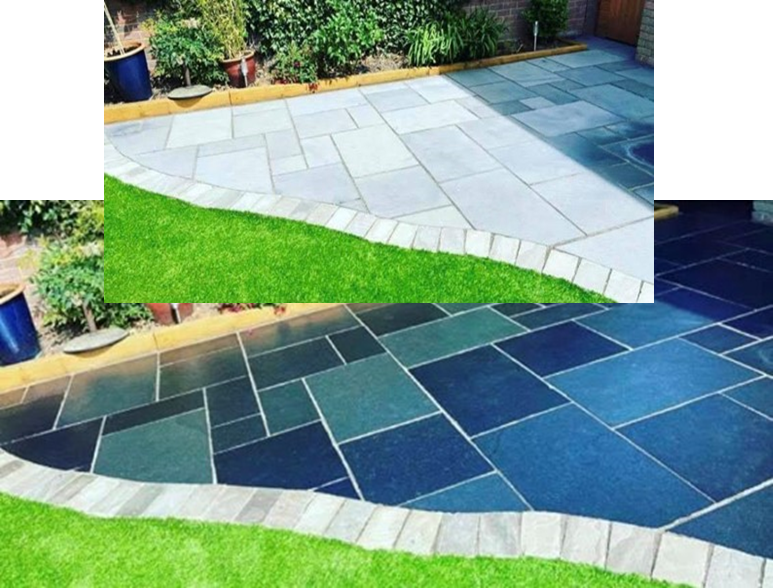
Sandstone and other natural stone patios are often great-looking options with a unique style, but they are susceptible to weathering and staining. If you have an area of sandstone paving that is not well covered then you may quickly find that the look changes and requires constant maintenance. Our sandstone patio sealer is a specialised solution designed to penetrate deep into the stone, offering long-lasting protection. This sealer preserves the natural appeal of your sandstone patio, ensuring it remains a low-maintenance and visually stunning outdoor feature for years to come.
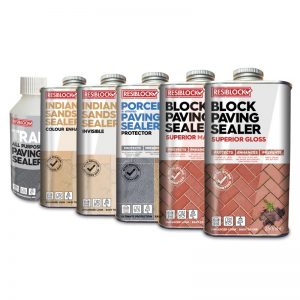
We provide a sandstone sealer colour enhancer and an invisible sandstone sealer option for our customers, depending on the look they want to achieve. Both are viable options for natural stone and help protect from both stains and algae growth. They also only require one coat for application.
Paver sealer remover: a fresh start for your patio
Change is inevitable, and when it’s time to refresh or alter your patio’s appearance, the Paver Sealer Remover becomes an invaluable tool. This solution allows you to safely and effectively strip away old or unwanted sealers from your pavers. It’s the first step towards a renewed and revitalised patio, ready for a fresh coat of sealant.
Our sealant remover is ready to use straight from the container and utilises safe, low-odour water-based technology to achieve the best result. It is viable when removing any paving sealer on any paved surface and restores the surface to its pre-paved condition.
Choosing the right option
Resiblock has been in the industry longer than any other companies in the UK. We have been providing the very best solutions for patio block paving sealers to both businesses and homeowners for over 30 years. Our products stand the test of time and effectively stop weeds from growing through the cracks when applied with sand joints.
We know that while there are many options out there, only one option makes sense – the one that lasts the longest, does the best job and comes with a guarantee. That’s us. Our patio sealers are one of the most hard-wearing and long-lasting, which will last for up to 5 years.
If you would like to have a selection of sealants for testing then we also provide samples (up to four).
At Resiblock, we also place a high value on customer service. If you are unsure which option may be right for you then just talk to us and we can help make sure it is the right fit. We offer comprehensive support for application and a range of products that can help meet the needs of your project perfectly.
Email us at [email protected] or telephone +44 (0)1268 273344 and one of our friendly team will be happy to help you.
Patio Sealer FAQS
Why should I seal my patio?
Sealing your patio protects the surface from rain, UV rays, stains and general wear, which keeps it looking better for longer and makes it far easier to maintain.
A good patio sealer also locks jointing sand in place, so it isn’t washed out when you pressure wash, and helps stop weeds growing through the joints. Without that protection, paving can fade, stain and loosen over time. Industry body Interpave publishes useful guidance on how block paving is laid and maintained, including the role jointing sand plays in keeping a paved surface stable.
Not sure which finish suits your patio? Browse the Resiblock domestic sealer range or contact the Resiblock team, who have over 30 years of experience helping homeowners choose the right product.
What is the difference between a matt and gloss patio sealer?
A matt sealer protects your paving with a natural, understated finish, while a gloss sealer creates a “wet look” that intensifies the colour and texture of the paving.
The Resiblock Superior Natural Matt finish suits clay and concrete block paving and is a popular choice for a long-lasting, professional result that doesn’t look treated. The gloss option is designed for concrete blocks only and gives a sleek, polished surface. Both help stop weeds when applied with sand joints. For background on the different types of concrete and clay block paving, Interpave is a helpful independent resource.
If you can’t decide between finishes, order Resiblock samples (up to four) and test them on a small area of your patio before committing.
Is there an environmentally friendly patio sealer?
Yes. Solvent-free patio sealers protect paving without the solvents found in many traditional products, making them a more sustainable choice.
Resiblock PatioSeal Environmental helps prevent stains and weed growth and can be used on clay blocks, concrete blocks, concrete flags, concrete slabs and natural stone. It is also suitable for indoor spaces, although it should not be used around swimming pools. If you are comparing products, the HSE guidance on COSHH explains why reducing exposure to hazardous substances such as solvents matters.
Sandstone patios are best protected with a dedicated sandstone sealer that penetrates the stone, guarding against weathering, staining and algae growth.
Natural stone is porous, so unsealed sandstone can quickly change in appearance and need constant upkeep. Resiblock offers a sandstone sealer colour enhancer to bring out the natural tones and an invisible sandstone sealer that protects without altering the look. Both need only one coat. The Stone Federation Great Britain is a good source of wider information on caring for natural stone.
You can strip old or unwanted sealer with a dedicated paving sealer remover, which returns the surface to its unsealed condition ready for a fresh coat.
Resiblock Paving Sealer Remover is ready to use straight from the container and uses low-odour, water-based technology. It works on any paving sealer and any paved surface, making it the first step if you want to change your patio’s finish or refresh a tired treatment.
A high-quality patio sealer can last for several years, with Resiblock patio sealers lasting up to five years.
Lifespan depends on the product, the paving type, how well the surface was prepared and how much wear it gets. Cheaper sealers often break down faster under UV exposure and heavy rain, which means reapplying more often. Resiblock is the only paving sealer with a guarantee and has been used on over 100 million square metres of paving across three decades.
Prefer to have it done professionally? Use the Resiblock Find a Contractor tool to locate an approved installer near you, or find a stockist if you’d rather apply it yourself.
In busy urban environments, where foot and vehicle traffic never lets up, keeping block paving structurally sound is essential. Heavy use leads to joint displacement, sand erosion and localised settlement, all of which undermine the paving and lead to costly repairs.
What is paving failure?
Paving failure is the breakdown of a block pavement’s structure, usually starting at the joints. Once jointing sand is lost, blocks lose their interlock, water reaches the layers below and the surface begins to move and settle.
Warning signs to look out for
Empty jointsGaps where the sand has washed or been swept out
Loose blocksBlocks that rock, shift or sit proud of the surface
SettlementDips, ruts or sunken areas, often along wheel tracks
Weed growthWeeds taking root in open joints
Standing waterPuddles forming or sand washing onto nearby areas
Trip hazardsUneven edges that put pedestrians at risk
Why joint stabilisation matters
The joint between segmental paving units is not just a filler. It supports the frictional interlock between independent blocks and is designed to accommodate small elastic deflections under load, spreading that load and reducing stress within the pavement structure.
When joints are left unprotected, traffic and cleaning wear the sand away and water reaches the layers below. It erodes the sub-base and forms voids, leading to settlement, trip hazards and expensive repairs. Stabilising the joints stops this at the start: the sand stays in place, water stays out and the pavement keeps its structural performance.
Resiblock 22 and Resiblock 22WB
Resiblock offers two products designed specifically for stabilising joints on block pavements. Both bind the jointing sand particles together and to the vertical faces of the pavers, while allowing the pavement to keep its normal flexibility.
Both products cure quickly, are unaffected by de-icing salts and help prevent weed growth, reducing ongoing maintenance and saving time and money over the life of the pavement.
Proven on demanding sites
With over 30 years in paving protection and more than 100 million square metres treated, Resiblock is trusted on some of the most demanding sites in the world. Resiblock 22 has been installed everywhere from RAF Kinloss in Scotland to Christchurch Airport in New Zealand.
Block paving usually fails when jointing sand is eroded, allowing joints to open up and water to get into the layers beneath.
Once water reaches the sub-base, it can wash out material and create voids, leading to uneven surfaces, localised settlement and trip hazards. Interpave, the precast concrete paving association, publishes guidance on designing and maintaining block paving that explains why well filled joints matter.
Why is joint stabilisation important for heavily trafficked paving?
Joint stabilisation keeps jointing sand in place, which preserves the interlock between blocks and stops water getting into the pavement.
The joint lets the paving flex slightly under load and spreads that load across neighbouring blocks. When the sand is lost, that ability goes too and the structural performance of the pavement declines.
What is the difference between Resiblock 22 and Resiblock 22WB?
Resiblock 22 is a specialist pre-polymer urethane (SPPU) jointing sand stabiliser, while Resiblock 22WB is its water-based, solvent free alternative.
Both bind the jointing sand, keep water out and help prevent weed growth, and both cure quickly for projects on tight timescales. Resiblock 22WB is also safe for internal use, making it suitable where an environmentally friendly formulation is a priority.
When it comes to maintaining commercial paving, one of the most significant challenges is the erosion of jointing sand. This erosion (or paving failure) can lead to a series of problems, including loss of interlock within the paver system, resulting in chipping, spalling, and ultimately, destabilisation of the pavers.
Whether caused by natural forces or human activities such as vacuum sweeping, pressure washing, or heavy traffic, the erosion of sand-filled joints can expedite water infiltration, leading to the degradation and liquefaction of the laying course and subgrades. This structural failure not only incurs high maintenance costs but also poses safety risks, potentially leading to slips, trips, and falls, which could result in costly claims.
Failure from heavy loads
Long term damage
Sand joints failing
How Resiblock Sealing Products Resolve Paving Failure
The key to ensuring low maintenance and reduced risk lies in providing good interlocking within the segmental paving system. This can be achieved by retaining the jointing sand, which is possible with the appropriate application of Resiblock products at the point of installation. By simply applying Resiblock, pavement owners can prevent the high costs associated with maintenance, repairs, and claims, while keeping disruption to a minimum.
Resiblock is widely regarded as Europe’s leading provider of commercial paving sealers. With a vast range of products and unrivalled experience, Resiblock has worked on numerous prestigious sites worldwide, including Heathrow Airport and Disneyland in Hong Kong. As experts in the field, Resiblock continually searches for innovative solutions to address the problems clients face daily.
Preventing Concrete Block Paving Failure
Concrete block paving installed over a DTp Type 1 sub-base is susceptible to water penetration through the paver joints, which can become trapped in the sub-base and sand laying course material. Subsequent traffic can cause deformation. Once saturated, the sub-base and laying course materials lose stability, failing to support traffic adequately. This instability leads to surface deformation and, eventually, paving failure.
Typically, concrete block paving can accommodate small elastic deflections and deformations without deterioration. However, when deflection or deformation exceeds 10mm, breakage of the pavers is likely. In severe cases, deformation can reach 50mm, leading to significant breakage. Such failures not only mar the appearance of the paving but also pose safety hazards, potentially leading to trips and falls.
Proven Prevention with Resiblock
Using Resiblock, paving failure can be prevented, avoiding the costs of repairing cracked paving and handling insurance claims related to pavement accidents. Resiblock’s products effectively protect paver joints and stop water penetration, ensuring the durability and stability of the paving.
Numerous case studies demonstrate the long-term benefits of Resiblock’s paver stabilisation solutions. Projects have successfully benefited from reduced maintenance and significantly lower whole-life costs. With more than three decades of experience in stabilising small element flexibly laid paving, particularly at airport and port side pavements, Resiblock’s expertise is recognised as the most definitive in its field.
Talk To Our Team For Advice and Support With Our Product Range
Discuss your upcoming commercial paving project with a member of the Resiblock team and discover how our sealing products can seal, stabilise, and protect all types of paving in various locations. By choosing Resiblock, you can ensure the longevity, safety, and aesthetic appeal of your commercial paving, while also reducing maintenance costs and preventing potential claims.
Paving failure is the breakdown of a paved surface, usually caused by the loss of jointing sand, which leads to loose, chipped, cracked or sunken pavers.
When jointing sand erodes, the interlock between pavers is lost and the surface can no longer spread loads effectively. This results in chipping, spalling and eventually destabilisation of the paving. Water can then get through the joints, weakening the laying course and sub-base beneath. Interpave, the precast concrete paving association, provides detailed guidance on how segmental paving relies on jointing and bedding materials to stay stable.
Want to understand the warning signs on your own site? Visit the Resiblock paving failure page for an overview of how it develops and how it can be stopped.
What causes jointing sand to erode?
Jointing sand erodes through a mix of natural forces and everyday activities, including rain, pressure washing, vacuum sweeping and heavy traffic.
On commercial sites, mechanical sweepers and regular jet washing can remove sand from joints faster than it can settle, while heavy vehicles and constant footfall loosen it further. Once joints are open, water gets in more easily and speeds up the damage. Sealing the joints with a stabilising product such as Resiblock Superior Matt at installation helps retain the sand and keep the paving interlocked.
For the research behind sand joint stabilisation, explore the Resiblock academic papers, which cover how Resiblock resolves these issues on high traffic pavements.
How does water cause block paving to fail?
Water that passes through open paver joints can become trapped in the sub-base and laying course, which lose stability once saturated and cause the surface to deform under traffic.
Concrete block paving laid over a DTp Type 1 sub-base can handle small elastic deflections, but once deformation exceeds 10mm, pavers are likely to break. In severe cases, deformation can reach 50mm and cause significant breakage. On sites where drainage matters, it is also worth reviewing the Resiblock SUDS and water management guidance, as sealing and water management need to work together.
Not sure how your paving would perform? Book a free Resiblock site trial to see the results on your own surface before committing.
What are the risks of paving failure on commercial sites?
Paving failure increases maintenance and repair costs and creates trip hazards that can lead to injuries and costly claims.
Loose, cracked or uneven pavers are a common cause of slips, trips and falls, and businesses have a duty to manage these risks. The HSE guidance on slips and trips explains employers’ responsibilities and the importance of well maintained floors and walkways. Preventing failure at installation keeps disruption low and reduces whole life costs compared with repeated repairs.
See how other businesses have tackled the problem in the Resiblock commercial case studies, including work on major sites such as Heathrow Airport.
How can paving failure be prevented?
Paving failure can be prevented by retaining the jointing sand, which is best achieved by applying a paving sealer that stabilises the joints at the point of installation.
A joint stabilising sealer locks the sand in place, stops water penetrating the joints and maintains interlock across the paving system. Resiblock has more than three decades of experience stabilising flexibly laid paving, particularly at airports and ports, and its commercial sealer range includes products for block paving in demanding environments.



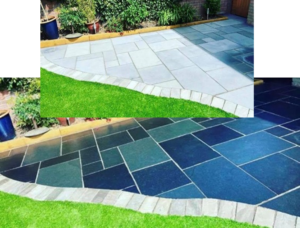
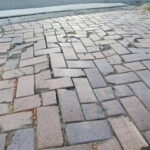
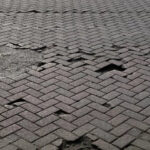
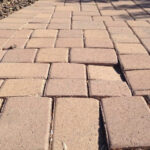
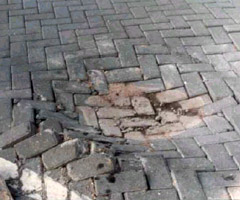 Concrete block paving installed over a DTp Type 1 sub-base is susceptible to water penetration through the paver joints, which can become trapped in the sub-base and sand laying course material. Subsequent traffic can cause deformation. Once saturated, the sub-base and laying course materials lose stability, failing to support traffic adequately. This instability leads to surface deformation and, eventually, paving failure.