



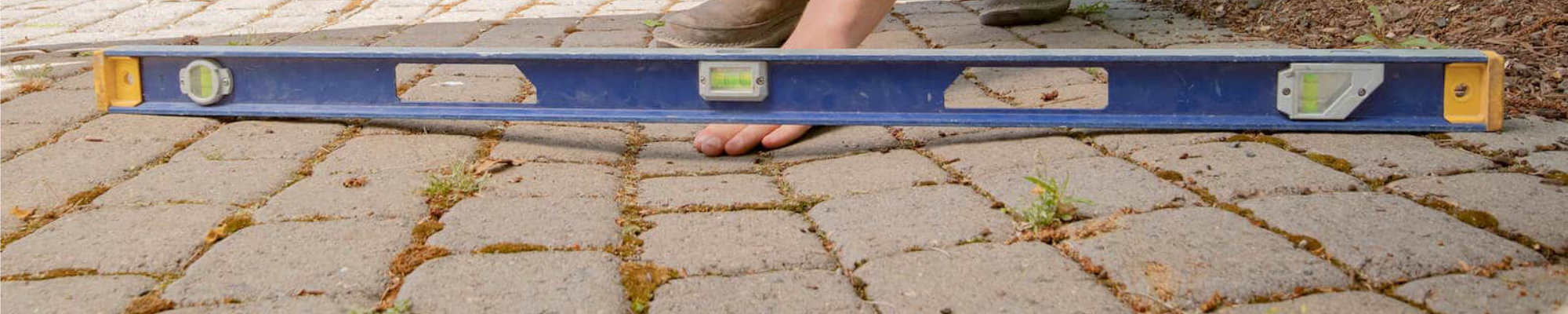
Preventing Paving Failure with Resiblock
3rd June 2026When it comes to maintaining commercial paving, one of the most significant challenges is the erosion of jointing sand. This erosion (or paving failure) can lead to a series of problems, including loss of interlock within the paver system, resulting in chipping, spalling, and ultimately, destabilisation of the pavers.
Whether caused by natural forces or human activities such as vacuum sweeping, pressure washing, or heavy traffic, the erosion of sand-filled joints can expedite water infiltration, leading to the degradation and liquefaction of the laying course and subgrades. This structural failure not only incurs high maintenance costs but also poses safety risks, potentially leading to slips, trips, and falls, which could result in costly claims.
-
- Failure from heavy loads
-
- Long term damage
-
- Sand joints failing
How Resiblock Sealing Products Resolve Paving Failure
The key to ensuring low maintenance and reduced risk lies in providing good interlocking within the segmental paving system. This can be achieved by retaining the jointing sand, which is possible with the appropriate application of Resiblock products at the point of installation. By simply applying Resiblock, pavement owners can prevent the high costs associated with maintenance, repairs, and claims, while keeping disruption to a minimum.
Resiblock is widely regarded as Europe’s leading provider of commercial paving sealers. With a vast range of products and unrivalled experience, Resiblock has worked on numerous prestigious sites worldwide, including Heathrow Airport and Disneyland in Hong Kong. As experts in the field, Resiblock continually searches for innovative solutions to address the problems clients face daily.
Preventing Concrete Block Paving Failure
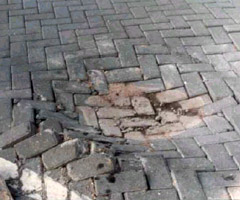 Concrete block paving installed over a DTp Type 1 sub-base is susceptible to water penetration through the paver joints, which can become trapped in the sub-base and sand laying course material. Subsequent traffic can cause deformation. Once saturated, the sub-base and laying course materials lose stability, failing to support traffic adequately. This instability leads to surface deformation and, eventually, paving failure.
Typically, concrete block paving can accommodate small elastic deflections and deformations without deterioration. However, when deflection or deformation exceeds 10mm, breakage of the pavers is likely. In severe cases, deformation can reach 50mm, leading to significant breakage. Such failures not only mar the appearance of the paving but also pose safety hazards, potentially leading to trips and falls.
Proven Prevention with Resiblock
Using Resiblock, paving failure can be prevented, avoiding the costs of repairing cracked paving and handling insurance claims related to pavement accidents. Resiblock’s products effectively protect paver joints and stop water penetration, ensuring the durability and stability of the paving.
Numerous case studies demonstrate the long-term benefits of Resiblock’s paver stabilisation solutions. Projects have successfully benefited from reduced maintenance and significantly lower whole-life costs. With more than three decades of experience in stabilising small element flexibly laid paving, particularly at airport and port side pavements, Resiblock’s expertise is recognised as the most definitive in its field.
Talk To Our Team For Advice and Support With Our Product Range
Discuss your upcoming commercial paving project with a member of the Resiblock team and discover how our sealing products can seal, stabilise, and protect all types of paving in various locations. By choosing Resiblock, you can ensure the longevity, safety, and aesthetic appeal of your commercial paving, while also reducing maintenance costs and preventing potential claims.
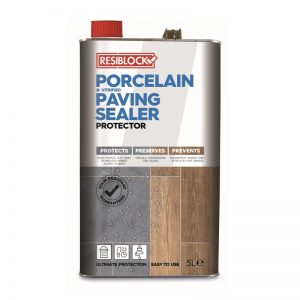
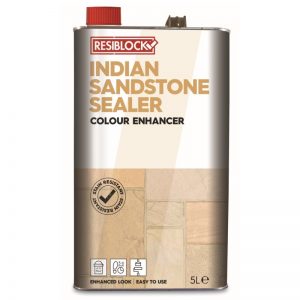
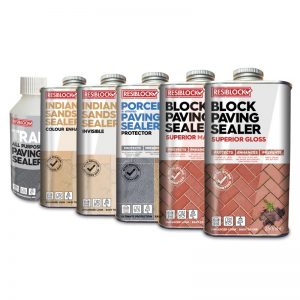
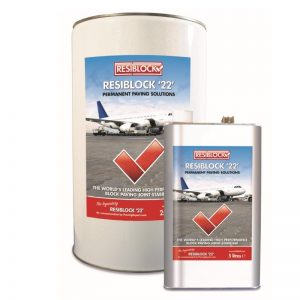
Our world leading sealing products
Paving Failure FAQs
What is paving failure?
Paving failure is the breakdown of a paved surface, usually caused by the loss of jointing sand, which leads to loose, chipped, cracked or sunken pavers.
When jointing sand erodes, the interlock between pavers is lost and the surface can no longer spread loads effectively. This results in chipping, spalling and eventually destabilisation of the paving. Water can then get through the joints, weakening the laying course and sub-base beneath. Interpave, the precast concrete paving association, provides detailed guidance on how segmental paving relies on jointing and bedding materials to stay stable.
Want to understand the warning signs on your own site? Visit the Resiblock paving failure page for an overview of how it develops and how it can be stopped.
What causes jointing sand to erode?
Jointing sand erodes through a mix of natural forces and everyday activities, including rain, pressure washing, vacuum sweeping and heavy traffic.
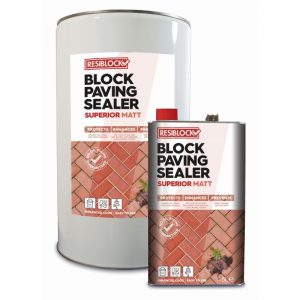
On commercial sites, mechanical sweepers and regular jet washing can remove sand from joints faster than it can settle, while heavy vehicles and constant footfall loosen it further. Once joints are open, water gets in more easily and speeds up the damage. Sealing the joints with a stabilising product such as Resiblock Superior Matt at installation helps retain the sand and keep the paving interlocked.
For the research behind sand joint stabilisation, explore the Resiblock academic papers, which cover how Resiblock resolves these issues on high traffic pavements.
How does water cause block paving to fail?
Water that passes through open paver joints can become trapped in the sub-base and laying course, which lose stability once saturated and cause the surface to deform under traffic.
Concrete block paving laid over a DTp Type 1 sub-base can handle small elastic deflections, but once deformation exceeds 10mm, pavers are likely to break. In severe cases, deformation can reach 50mm and cause significant breakage. On sites where drainage matters, it is also worth reviewing the Resiblock SUDS and water management guidance, as sealing and water management need to work together.
Not sure how your paving would perform? Book a free Resiblock site trial to see the results on your own surface before committing.
What are the risks of paving failure on commercial sites?
Paving failure increases maintenance and repair costs and creates trip hazards that can lead to injuries and costly claims.
Loose, cracked or uneven pavers are a common cause of slips, trips and falls, and businesses have a duty to manage these risks. The HSE guidance on slips and trips explains employers’ responsibilities and the importance of well maintained floors and walkways. Preventing failure at installation keeps disruption low and reduces whole life costs compared with repeated repairs.
See how other businesses have tackled the problem in the Resiblock commercial case studies, including work on major sites such as Heathrow Airport.
How can paving failure be prevented?
Paving failure can be prevented by retaining the jointing sand, which is best achieved by applying a paving sealer that stabilises the joints at the point of installation.
A joint stabilising sealer locks the sand in place, stops water penetrating the joints and maintains interlock across the paving system. Resiblock has more than three decades of experience stabilising flexibly laid paving, particularly at airports and ports, and its commercial sealer range includes products for block paving in demanding environments.
Planning a commercial paving project? Request a free quote from Resiblock and the team will advise on the right product for your site.