


The Ultimate Guide to Applying Concrete Block Paving Products
8th June 2026Concrete block paving is one of the most versatile surfaces you can choose for a driveway, path or patio. It’s affordable, hard-wearing and can be laid in a wide range of patterns. To keep it looking its best for years, though, it needs the right finishing products, applied in the right way.
This guide explains which Resiblock concrete block paving products to use, how to prepare your paving and what to expect from each product, from sealers that guard against oil stains and weeds to stabilisers that lock jointing sand in place.
- For domestic driveways and paths, Resiblock Superior Matt or Superior Gloss seals the blocks and binds the jointing sand in one product
- Resiblock 22 is a jointing sand stabiliser for heavily trafficked commercial paving, applied daily as the paving is laid
- Most products need dry paving, a temperature between 3°C and 30°C and a rain-free window after application
- Wait at least 8 weeks before sealing newly laid block paving with Resiblock Superior
Which concrete block paving product do you need?
Each Resiblock product does a slightly different job, so start by matching the product to your project.
| Product | What it does | Best for |
|---|---|---|
| Resiblock Superior Natural Matt | Seals the blocks and binds jointing sand with a natural finish | Domestic driveways, paths and patios |
| Resiblock Superior Gloss | Seals the blocks and binds jointing sand with a wet look finish | Domestic driveways where a glossy finish is wanted |
| Resiblock 22 | Stabilises jointing sand on new installations | Roads, car parks and other heavily trafficked commercial paving |
| Resiblock Patioseal Environmental | Solvent free sealer that binds paving and joints together | Patios, including those with sand or mortar joints |
Working with a different surface, such as tarmac, imprinted concrete or natural stone? Our guide to choosing the right driveway sealer covers every surface.
Before you apply any block paving product
Good preparation makes the biggest difference to the finish. Whichever product you choose, check the following first:
- The paving is clean: remove algae, moss, dirt and any old sealer. Treat oil stains and efflorescence before sealing so they aren’t locked in. Our cleaning and sealer removal products can help.
- The surface is thoroughly dry: damp paving and jointing sand stop the product penetrating properly and can cause discolouration.
- The weather is right: apply between 3°C and 30°C, with no rain forecast during the product’s rain-free period. Check the Met Office forecast before you start.
- Jointing sand sits at the right level: fill joints to the chamfer of the block rather than the surface, and sweep away any loose sand so it isn’t picked up by your roller.
- You have the right tools: a Resi-Roller on an extension pole, a Resi-Scuttle and a squeegee make application quicker and more even. Find them in our application products range.
Resiblock Superior Natural Matt
Launched in 1993, Resiblock Superior Natural Matt is our most popular block paving sealer. It protects against stains, spills and weeds, stops jointing sand washing out and is the only block paving sealer in Europe with a No Oil Stains Guarantee.

Resiblock Superior Natural Matt
- FinishNatural matt
- CoatsTwo (one on clay pavers)
- Coverage3m² per litre (first coat), 6m² per litre (second coat)
- Time between coats3 to 24 hours
- Application temperature3°C to 30°C
- Rain-free period12 hours
- New pavingWait at least 8 weeks
- Foot trafficAfter 3 hours
- VehiclesUp to 24 hours
- ProtectionUp to 5 years
Apply liberally with a Resi-Roller on an extension pole, working the sealer across the surface and into the joints. For a step by step walkthrough, read our specialist tips for installing driveway sealer.
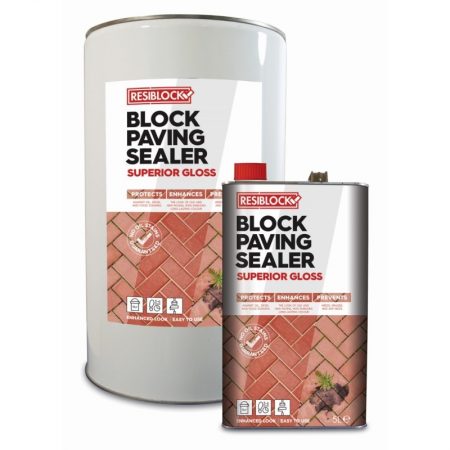
Resiblock Superior Gloss
Resiblock Superior Gloss gives the same protection as Superior Matt, including the No Oil Stains Guarantee, with a wet look finish that brings out the colour of the blocks. It won’t chip or peel and stops weeds taking hold in the joints.
Resiblock Superior Gloss
- FinishWet look gloss
- CoatsTwo
- Coverage3m² per litre (first coat), 6m² per litre (second coat)
- Application temperature3°C to 30°C
- Rain-free period8 hours
- ProtectionUp to 5 years
Make sure the surface is completely dry before you start, as moisture can cause discolouration and poor adhesion. Use the product undiluted, and pour it into a Resi-Scuttle to save constant refilling.
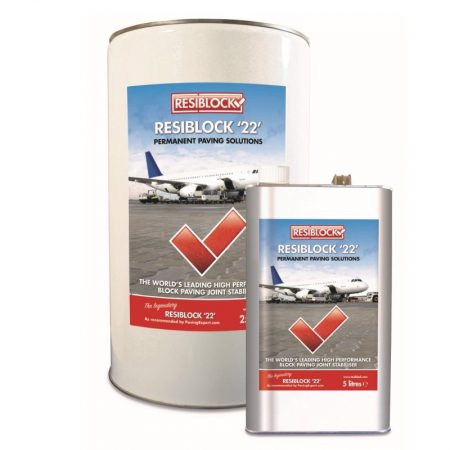
Resiblock 22
Resiblock 22 is a specialist pre-polymer urethane (SPPU) jointing sand stabiliser for flexibly laid block paving. It binds the sand to itself and to the sides of each block, keeping water and fuel out of the joints and dramatically extending the life of heavily trafficked pavements.
Resiblock 22
- CoatsTwo on concrete, one on clay
- CoverageAround 2m² per litre on standard 100 x 200mm blocks
- Application temperature3°C to 30°C
- Rain-free period8 hours
- VehiclesAfter 24 hours
- Pack sizes5L and 25L
On new projects, apply Resiblock 22 at the end of each working day as the paving is laid, rather than waiting until the job is finished. It’s used straight from the pack with no thinning, applied with a watering can and rose, then worked into the joints with a squeegee. Our guide on how to apply Resiblock 22 covers the full process. Where a solvent free option is preferred, Resiblock 22WB offers the same joint protection.
Resiblock Patioseal Environmental
Resiblock Patioseal Environmental is a solvent free sealer that penetrates both the paving and the joints, binding them together for protection against the weather and jet washing. Its eco-friendly formula makes it a popular choice for patios.

Resiblock Patioseal Environmental
- FormulaSolvent free
- Coverage (sand joints)2m² per litre
- Coverage (mortar joints)4m² per litre
Once the patio is clean and dry, sweep the sealer into place and leave it to cure.
Get expert help with your paving
Not sure which product is right for you? Order Resiblock samples to test the finish, download the application guidelines or call our team on 01268 273344. If you’d rather leave it to a professional, our Find a Contractor tool lists approved installers near you.
Concrete Block Paving Products FAQs
What is the difference between Resiblock Superior Matt and Superior Gloss?
The only real difference is the finish: Superior Matt gives a natural look, while Superior Gloss gives a wet look that deepens the colour of the blocks.
Both are two coat sealers with the same coverage, both bind jointing sand and stop weeds, and both carry the No Oil Stains Guarantee for up to 5 years of protection. Interpave publishes independent guidance on choosing and maintaining concrete block paving if you’re weighing up the look of your drive.
Still undecided? Order Resiblock samples of Superior Matt and Superior Gloss to compare them on your own paving.
How long should I wait before sealing new block paving?
Wait at least 8 weeks before sealing newly laid concrete block paving with Resiblock Superior.
This gives the jointing sand time to settle and allows any efflorescence, the white salty deposit common on new concrete blocks, to come to the surface so it can be cleaned off rather than sealed in. Top up the joints to the chamfer of the blocks before sealing.
The exception is Resiblock 22, which is applied daily as new paving is laid. Read how to apply Resiblock 22 for the full process.
Do I need a jointing sand stabiliser as well as a block paving sealer?
For most domestic driveways and paths, no, because Resiblock Superior seals the blocks and stabilises the jointing sand in one product.
A dedicated stabiliser such as Resiblock 22 is designed for heavily trafficked commercial paving, including roads, car parks, ports and airports, where joints face constant loading and vacuum sweeping. It’s applied on a daily basis during installation to protect the pavement from the start.
Specifying a commercial project? Explore the Resiblock commercial sealers range or request a free site trial.
How much block paving sealer do I need?
For two coats of Resiblock Superior, allow around 1 litre for every 2m² of concrete block paving, so a 5 litre tin covers roughly 10m².
The first coat covers 3m² per litre and the second covers 6m² per litre, as the paving absorbs less once it has been sealed. Porous blocks and wide joints can use more, so measure your area carefully and round up.
For exact rates on other paving types, check the Resiblock technical data sheets or contact Resiblock on 01268 273344.
Can I seal block paving in autumn or winter?
You can seal block paving in autumn as long as the paving is dry, the temperature stays between 3°C and 30°C and no rain is forecast, but winter conditions rarely allow it.
Cold, damp weather and short days make it hard for paving to dry fully and for sealer to cure, which affects the finish. Early autumn is usually the last reliable window, so check the Met Office forecast for a settled spell.
If the weather has already turned, use the winter to plan, clean and order Resiblock samples, ready to seal in spring with Resiblock Superior.
How long does block paving sealer last?
Resiblock Superior protects concrete block paving for up to 5 years when correctly applied.
How long it lasts in practice depends on traffic, weather and how well the surface was prepared before sealing. Regular sweeping and avoiding high pressure jet washing close to the joints will help the sealer perform for longer.
Find out more in our guide to how durable block paving sealant is, or browse the full Resiblock domestic sealers range.