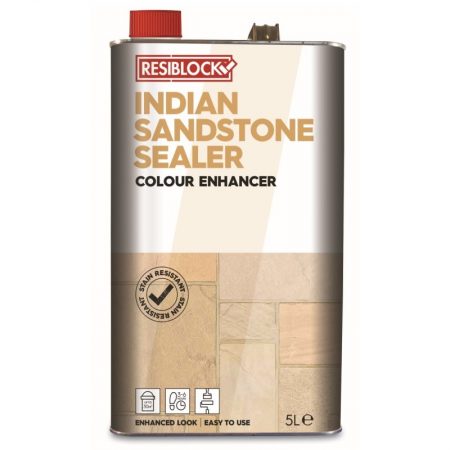
Application Summary
Quick-reference checklist of key requirements before and during application
Not suitable for: PIC, Engineering Bricks, Quarry Tiles, Marble or Slate.
-
1Confirm surface and jointing sand are thoroughly dry and clean
Surface must be clean and free from oil, algae, dust and lime bloom. To check: scrape jointing sand to a depth of 5–10mm — if the sand is dry, so is the paving. Ensure sand is 2–3mm below the surface to avoid pick-up by the application roller.
-
2Check weather — no rain within 8 hours
Do not apply if rain is forecast within 8 hours, or in temperatures below 3°C or above 30°C. For temperatures outside this range, contact Resiblock's application department for special procedures.
-
3Sweep paving thoroughly
Ensure paving is thoroughly swept. Where applicable, ensure no jointing sand remains in the chamfers of the pavers.
-
4Apply with a Resiblock application roller
Apply to the surface using a Resiblock application roller. Remove any build-up in depressions with a clean roller or builder's sponge. Apply at 4–6 m² per litre (or 2–3 m² per litre where sand-filled joints are present).
-
5Restrict access during cure
No foot traffic for 3 hours after application. Do not allow full vehicle traffic for 24 hours — full chemical cure must take place before the surface is subjected to full traffic use.
-
6Clean all tools immediately with RESICLEAN
All uncured sealant and tools must be cleaned immediately using RESICLEAN only. Do not use other solvents. Wash with water and detergent afterwards.
Full Application Instructions
Complete step-by-step guidance from surface preparation through to maintenance
Application rates vary depending on porosity but will be in the order of 4–6 m² per litre. Where the paving has a sand-filled joint (nominal 5mm), material usage should be increased to 2–3 m² per litre. Coverage rates apply to Indian Sandstone, Sandstone, Yorkstone and Limestone — contact Resiblock's Technical Department for other stone types.
In the container the product appears as a low viscosity prepolymer urethane with a hydrocarbon odour. Application will alter the appearance of the pavers by darkening the surface, enhancing the inherent colours — similar to the effect found after rainfall.
The surface must be clean and free from oil, algae, dust and lime bloom. Substrate must be dry — application to damp or wet surfaces can result in poor adhesion and discolouration. Jointing sand containing moisture can prevent bonding. Do not use if rainfall is forecast within 8 hours of project completion. For mortared joints, instructions relating to sand-filled joints can be disregarded. If pavers or joints have been previously treated with any other stabiliser or sealer, contact Resiblock's Technical Department prior to application.
On new work, a thorough sweep with a stiff broom is usually sufficient. If the surface has become partially weathered or contaminated, the area must be thoroughly pressure washed. Application to poorly prepared paving — particularly regarding dampness — can result in inadequate joint penetration, poor adhesion, or in exceptional circumstances discolouration and disbonding.
Ideally, at installation joints should only be half-filled with kiln-dried sand. The remaining sand may be added once the paving has dried, allowing final filling and compaction on the same day as sealing, ensuring the sand is completely dry for optimum absorption.
Thoroughly clean using a pressure cleaner to remove all algae, lichen, weeds, grass, food and drink stains, and surface grime. Allow at least 2 weeks between cleaning and application to allow the area to dry out fully and to check for lime-bloom reappearance.
Once thoroughly dry, re-fill joints using kiln-dried sand. Sweep in using a soft broom and completely remove all surplus sand.
- Resiblock application roller
- Clean roller or builder's sponge (for removing build-up in depressions)
- RESICLEAN for tool cleaning
-
1Apply with a Resiblock application roller
Apply to the surface using a Resiblock application roller at a rate of 4–6 m² per litre depending on porosity, or 2–3 m² per litre where sand-filled joints are present. Do not dilute the product.
-
2Remove any build-up in depressions
Remove any build-up of product in depressions or low-lying areas using a clean roller or builder's sponge. Excess product pooling in depressions may cause a white/milky residue as solvents are released during cure.
Efflorescence can appear as white powdery patches before application, or creamish patches after. Steps to reduce the risk:
- Apply after a dry spell of at least 48 hours and verify the entire paved area is dry by checking the sand joints.
- Allow 8 weeks after paving installation before applying. Allow at least 2 weeks after washing/pressure cleaning of old installations.
- If lime bloom appears before sealing, clean with Resiblock E.R. (efflorescence remover).
- If in doubt, contact the Resiblock technical department before proceeding.
Resiblock Indian Sandstone Sealer Colour Enhancer cures rapidly on exposure to atmospheric moisture. Clean all equipment immediately using RESICLEAN only. Do not use other solvents as unknown synergistic reactions may occur. Wash with water and detergent afterwards.
Technical Datasheet
Product description, features, performance data and storage information
| Property | Specification | Notes |
|---|---|---|
| Product Type | Urethane based low viscosity prepolymer surface sealer & colour enhancer | Aliphatic based; moisture-cure system; high UV resistance |
| Suitable Substrates | Indian Sandstone, Sandstone, Yorkstone, Limestone and other Natural Stone | Contact Technical Dept for stone types not listed |
| Not Suitable For | PIC, Engineering Bricks, Quarry Tiles, Marble, Slate, Exposed Aggregate Panels | |
| Appearance After Application | Darkens surface — enhances inherent colour | Similar to the effect found after rainfall. Cannot be easily removed once cured. |
| Coverage — Standard Porosity | 4–6 m² per litre | Indian Sandstone, Sandstone, Yorkstone, Limestone |
| Coverage — Sand-Filled Joints | 2–3 m² per litre | Where nominal 5mm sand-filled joint is present |
| Number of Coats | 1 coat (standard) | Second coat not normally recommended — call 01268 273344 for advice |
| Application Temperature | 3°C – 30°C | Contact Resiblock for procedures outside this range |
| Rain-Free Period | 8 hours after project completion | |
| Initial Cure / Foot Traffic | 3–6 hours; once surface is dry | Depending on ambient temperature, humidity and paver porosity |
| Full Chemical Cure / Full Traffic | 24 hours | |
| Drying Time | 2 hours at 20°C | |
| Flash Point | 45°C | Flammable — no smoking or naked flames |
| Heat Resistance | Proven to withstand temperatures in excess of 200°C | |
| UV Resistance | High — suitable for countries with high UV radiation levels | |
| Elongation (ASTM D 2370) | Greatly exceeds test — fully elastomeric | |
| Shelf Life | 18 months (unopened containers) | 18 months from date of purchase |
| Storage | Store under cover, protect from extremes of temperature. Mix thoroughly before use. | If stored below 10°C, polymer may settle — mix well before use |
| Shipping | Packing Group III — UN No. 1866 Class 3.3 | |
| Tool Cleaning | RESICLEAN only — immediately after use | Do not use other solvents |
| Quality Standard | Manufactured under ISO 9002 |
Typical values. Infiltration data — University of Newcastle / British Aerospace Military Aircraft Ltd.
| Infiltration Test Liquid | Resiblock Result (ml/sec) | Max Permitted (ml/sec) | Rating |
|---|---|---|---|
| Unleaded petrol | <0.020 | 0.02 | Excellent |
| AVGAS | <0.020 | 0.02 | Excellent |
| Diesel fuel | <0.020 | 0.02 | Excellent |
| Water | 0.022 | 0.05 | Excellent |
| Skid Resistance (Pendulum Test) | Result |
|---|---|
| Concrete pavers — unsealed | 69 |
| Concrete paver — sealed with Colour Enhancer | 52 |