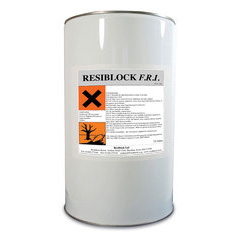
Application Summary
Quick-reference checklist of key requirements before and during application
-
1Fill joints with sand to BS 6717
Paving joints must be completely filled with jointing sand to BS 6717 to the underside of the chamfers before proceeding.
-
2Compact, then sweep carefully
After final compaction of the jointing sand, carefully sweep the pavers to ensure very little sand remains in the chamfers.
-
3Confirm surface is dry and clean
Before application, the paver surface must be dry and free from oil, laitance and loose sand particles.
-
4Apply undiluted with a purpose-made roller
Apply directly from the container using a purpose-made application roller. Spread evenly and allow to fill the chamfers. Do not dilute. Once the container is opened, apply without delay. 1st coat at 1.8 m²/litre, 2nd coat at 3.0 m²/litre.
-
5Work into joints, spread excess to untreated areas
Work the sealer into the joints and allow it to penetrate. Spread any excess material onto untreated areas to avoid pooling.
-
6Clean all tools immediately with RESICLEAN
All uncured sealant and tools must be cleaned immediately using RESICLEAN. Do not use other solvents.
Full Application Instructions
Complete step-by-step guidance from surface preparation through to curing
Coverage is 1.8 m² per litre on the first coat and 3.0 m² per litre on the second coat, depending on joint width and paver porosity. The specification clause gives an overall guide of approximately 1.6 m² per litre, varying with joint width, paver porosity and ambient temperature. F.R.I. is a two-coat system.
-
1Fill joints with sand to BS 6717
Paving joints shall be completely filled with jointing sand to BS 6717 to the underside of the chamfers.
-
2Compact and sweep
After final compaction of the jointing sand, the pavers shall be carefully swept to ensure that very little sand remains in the chamfers.
-
3Ensure surface is dry and clean
Before application of the sealer, the surface of the pavers shall be dry and free from oil, laitance and loose sand particles.
-
1Apply first coat undiluted with a purpose-made roller
Apply the sealer directly from the container and spread evenly onto the pavers using a purpose-made application roller, allowing it to fill the chamfers. Do not dilute. Once the container has been opened, apply without delay. First coat at 1.8 m²/litre.
-
2Work into joints and spread excess
The sealer should be worked into the joints and allowed to penetrate. Any excess material must be spread onto untreated areas to prevent pooling on the surface.
-
3Allow first coat to dry, then apply second coat
Allow the first coat to dry (approximately 2 hours at 20°C), then apply the second coat at 3.0 m²/litre following the same method. F.R.I. cures rapidly, ensuring rapid re-use of the roundabout.
Store under cover and protect from extremes of temperature. Being aliphatic based, F.R.I. is temperature sensitive — if stored at temperatures below 10°C, the polymer may tend to settle out of the solvent. Ensure the contents of the container are thoroughly mixed before use.
F.R.I. cures rapidly on exposure to atmospheric moisture. Clean all uncured sealant and tools immediately using RESICLEAN. Do not use other solvents.
Technical Datasheet
Product description, features, performance data and storage information
| Property | Specification | Notes |
|---|---|---|
| Product Type | Urethane based low viscosity prepolymer jointing sand stabiliser & surface sealer | Moisture-cure system; designed for black/white chevron block-paved roundabouts |
| Suitable Substrates | Black/white chevron block-paved roundabouts & traffic islands | Ideal for pavers with Ballotini beading, epoxy paints, chlorinated rubber paints |
| Not Suitable For | PIC, Engineering Bricks, Quarry Tiles, Marble | |
| Fields of Application | Roundabouts, traffic islands, pelican crossings, kerbing, car park demarcation, high visibility paving, disabled primary routes | |
| Coverage — 1st Coat | 1.8 m² per litre | Depending on joint width and paver porosity |
| Coverage — 2nd Coat | 3.0 m² per litre | Apply once first coat is dry |
| Number of Coats | 2 coats | |
| UV Stability | UV stable — ensures non-yellowing of white pavers | Will not adversely affect reflective nature of Ballotini bead |
| Drying Time | 2 hours at 20°C | Fast cure — rapid re-use of roundabout |
| Flash Point | 45°C | Flammable — no smoking or naked flames |
| Heat Resistance | Proven to withstand temperatures in excess of 200°C | |
| Elongation (ASTM D 2370) | Greatly exceeds test — fully elastomeric | |
| Chemical Resistance | High degree of resistance to commercial chemicals | Unaffected by commercial de-icing salts |
| Removability | Pavers can still be easily removed | For access to services below pavement |
| Shelf Life | 12 months (unopened containers) | 12 months from date of purchase |
| Storage | Store under cover, protect from extremes of temperature. Mix thoroughly before use. | Aliphatic based — if stored below 10°C polymer may settle |
| Shipping | Packing Group III — UN No. 1992 Class 3.3 | |
| Can Sizes | 5 litre cans and 25 litre kegs | |
| Tool Cleaning | RESICLEAN only — immediately after use | Do not use other solvents |
| Quality Standard | Manufactured under ISO 9002 |
Specification Clause
For engineers & specifiers — sealing block-paved roundabouts
The sealer shall be a moisture triggered aliphatic liquid SPPU (Specialist Pre-Polymer Urethane) in a hydrocarbon solvent, having the following minimum properties:
- High tolerance to UV radiation.
- Surface curing time not to exceed 24 hours (touch dry approximately 2 hours at 15°C).
- Does not adversely affect slip/skid values.
- Be highly resistant to oils, diesel, petrol and de-icing fluids.
- Must not adversely change the colour of the paving over the life cycle of the product (minimum 10 years).
- Elongation at break of film not less than 350% (ASTM D2370).
- Withstand temperatures in excess of 200°C.
- Prevent jointing sand erosion by a direct jet of water at a pressure no less than 200 bar (1500 p.s.i.), with the lance 150mm from the surface.
- The sealer must be capable of penetrating the joints to a minimum depth of 20mm and shall form a flexible elastomeric water and fuel resistant bond.
The material will need to withstand a minimum of 10,000,000 cumulative standard axles without distress or deformation to the stabilised sand, demonstrated by proven track record for a period of no less than 5 years. The material shall demonstrate that it is fully able to bond both the sand-filled joints and the reflective beaded surface, whilst at the same time not being subject to yellowing by U.V. light — demonstrated by proven safety and performance track record for at least 5 years on similar pavements.
Coverage rate will vary upon such factors as width of joints, porosity of pavers and ambient temperature but shall be of the order of 1.6 m² per litre. Paving joints shall be completely filled with jointing sand to BS 6717 to the underside of the chamfers. After final compaction, pavers shall be carefully swept so that very little sand remains in the chamfers. Before application, the surface shall be dry, free from oil, laitance and loose sand particles. The sealer shall be applied directly from the container and spread evenly using a purpose-made application roller, worked into the joints and allowed to penetrate, with excess spread onto untreated areas. The sealer must not be diluted and, once opened, should be applied without delay.